

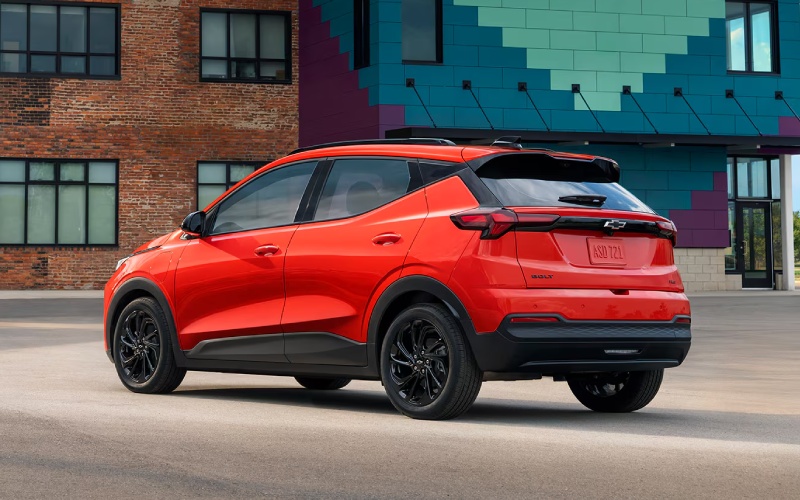
Mills Chevrolet - Can I use Tesla Superchargers around Bettendorf, IA with the 2027 Chevrolet Bolt?
The short path to EV confidence in the Quad Cities starts with knowing where and how you can charge. If you are considering the 2027 Chevrolet Bolt for life around Bettendorf, IA and across the I-74 River Bridge, you are likely wondering whether you can simply pull into a Tesla Supercharger and power up. You can — and doing it well comes down to a few practical steps that make everyday DC Fast Charging as easy as a coffee stop on State Street.
Below, our Mills Chevrolet team breaks down how the 2027 Chevrolet Bolt connects to Tesla Superchargers, what charging speeds to expect, and how to plan Bettendorf-to-everywhere drives with confidence. We will also touch on home-charging basics to help you decide when to Supercharge and when to plug in at home.
Why the 2027 Chevrolet Bolt works at Tesla Superchargers
The 2027 Chevrolet Bolt includes a standard NACS charge port. That means you can plug directly into most Tesla Superchargers that provide NACS cables — no adapter required. Chevrolet designed the new Bolt to take advantage of the rapidly expanding NACS network, so DC Fast Charging on road trips or quick top-ups during a busy day around the Quad Cities is straightforward.
Compatibility does vary by site, so it is always smart to check the Tesla app or a charging locator before you go. Around Bettendorf and neighboring Davenport and Moline, you will find Superchargers conveniently positioned along I-74 and I-80 corridors, with more locations continuing to roll out across the region.
How to charge at a Tesla Supercharger with your Bolt
Once you know a site offers NACS cables, the process is refreshingly simple. Here is a quick reference you can save for your first few sessions.
- Set up the app: Create or sign in to a Tesla account and add a payment method. You can also cross-check site status and real-time stall availability in your myChevrolet app or other public-charging apps.
- Navigate to the site: Use Google built-in in the Bolt to route to a charger and monitor traffic across the I-74 bridge or I-80. Arriving with a lower state of charge typically shortens your overall fast-charge time.
- Park and plug in: Back in so the NACS cable easily reaches the port. Plug in — the stall should authenticate and start charging automatically.
- Monitor briefly: Check charge speed and estimated time to your target percentage on the Bolt’s 11.3-inch infotainment screen or your phone. You can step away for a snack at nearby shops while it charges.
- Unplug and go: When you reach your target level, stop the session in the app or on screen, unplug, and you are set for the next leg.
Our team is happy to walk you through this process during your test drive and first charge — we can help you set up apps, choose realistic charge targets for your routine, and understand how to read the on-screen data.
What charging speed should you expect?
The 2027 Chevrolet Bolt supports DC Fast Charging that GM estimates can take the battery from roughly 10 percent to 80 percent in about 25 minutes at a compatible public DC Fast Charger. Tesla Superchargers with NACS connectors fall into that “compatible” category, and many sites in and around the Quad Cities offer the power needed to reach those times. Actual speed depends on a few everyday variables:
- State of charge on arrival: Lower battery levels enable faster initial charging; speeds naturally taper as you approach full.
- Charger power and sharing: Some sites share power between adjacent stalls. If one neighbor is charging hard, your rate may adjust.
- Battery temperature: Very hot or very cold conditions can reduce peak charge rates until the battery warms or cools.
- Session target: Stopping at 70–80 percent for road trips often shortens total travel time compared to waiting for 90–100 percent.
Helpful Bolt tip: Chevrolet’s updated battery technology recommends regular 100 percent charging for overall charging performance. That is ideal for overnight Level 2 at home, while DC Fast Charging on the road is most time-efficient when you add shorter 10–80 percent sessions at convenient stops.
Bettendorf-area use cases: errands, commutes, and easy road days
With an EPA-estimated 262 miles of electric range, the 2027 Chevrolet Bolt comfortably covers typical Quad Cities driving without a mid-day charge. Quick trips from Bettendorf to downtown Davenport via the I-74 bridge or to Moline’s riverfront are simple out-and-back drives within a small fraction of the Bolt’s range.
For day trips, consider these approximate, real-world scenarios:
- Iowa City/Coralville: Around 55–65 miles one way. No fast charge required — top off at home and enjoy the day.
- Galena or Le Claire and Great River Road: About 75 miles or less each way depending on routing. Plenty of margin for exploring and returning home to charge.
- Des Moines or Chicago: Typically 170–180 miles one way. Plan a brief DC Fast Charging stop along I-80 or I-88. A 10–80 percent session near the midpoint keeps total trip time efficient.
Whether you are catching a game at the TBK Bank Sports Complex in Bettendorf or heading out for a weekend in the Driftless Area, the combination of strong range and widely available NACS DC fast charging makes the new Bolt an easy fit.
Home charging vs. Supercharging in the Quad Cities
Superchargers are excellent for road trips or quick turnarounds. For daily life, most owners prefer the convenience of home charging — plug in, wake up full, and skip public stations entirely during the week.
Here is how home charging typically looks around Bettendorf and Davenport:
- Level 1 (120V household outlet): Great for light daily driving and apartment scenarios. Adds meaningful miles overnight, especially if your commute is short.
- Level 2 (240V circuit): The sweet spot for most households. A dedicated 240V circuit and compatible home EVSE can comfortably recharge from low to full overnight.
- Installation support: We can help you understand circuit options and refer you to licensed local electricians familiar with Quad Cities permitting and panel upgrades.
Use home charging as your baseline, then rely on Tesla Superchargers and other public DC Fast Chargers for longer trips and on-the-go flexibility.
Tech that simplifies charging and navigation
The 2027 Chevrolet Bolt integrates smart tools to streamline charging. Google built-in helps you search for charging locations by name or network, check hours, and route around traffic over the I-74 bridge. The 11.3-inch infotainment screen and 11-inch Driver Information Center keep charging status front and center. Available Super Cruise® driver assistance technology can make highway travel more relaxing when conditions permit, and available HD Surround Vision helps with low-speed maneuvering into tight charging spots.
Every Bolt also includes over 20 standard safety and driver assistance features. As always, driver-assistance features do not replace your responsibility to drive attentively and follow posted rules and conditions.
Frequently Asked Questions:
Do I need an adapter to use a Tesla Supercharger with the 2027 Chevrolet Bolt?
No adapter is needed at sites that provide NACS cables. The 2027 Chevrolet Bolt includes a standard NACS charge port, so you can plug directly into compatible Tesla Superchargers. Always check the Tesla app to confirm the connector type available at a specific site.
How fast will the 2027 Chevrolet Bolt charge at a Tesla Supercharger?
GM estimates approximately 10–80 percent in about 25 minutes at a compatible public DC Fast Charger. Your real-world time can vary based on charger power, battery temperature, and your arrival state of charge. For trip efficiency, plan shorter sessions and get back on the road.
Can I use non-Tesla public fast chargers around Bettendorf and Davenport?
Yes. The Bolt works with most public DC Fast Chargers and opens up an even wider network across the Quad Cities. Many highway-adjacent stations along I-80 and I-74 provide reliable options in addition to Tesla Superchargers.
What about winter driving — will cold weather affect Supercharging?
Cold temperatures can temporarily reduce initial charge speeds until the battery warms. Plan to arrive with a lower state of charge, and expect the fastest rates once the system reaches optimal temperature. Preheating the cabin while plugged in at home can also preserve range on frigid mornings.
Does the Bolt plan charging stops for me?
You can search and route to charging in the vehicle with Google built-in and manage sessions with popular charging apps, including Tesla’s. Set a realistic target charge percentage before each leg, and use the on-screen ETA and range estimates to fine-tune your stops.
Thinking about making the switch? Visit us at Mills Chevrolet on Elmore Avenue in Davenport — just minutes from Bettendorf — and we will take you through the 2027 Chevrolet Bolt’s charging experience end to end. We can help you set up the right apps, demonstrate a DC Fast Charging session, and map out your first Bettendorf-to-Chicago or Bettendorf-to-Des Moines route. Schedule your Bolt test drive today, and let our team show you how effortless NACS fast charging can be in everyday Quad Cities life.
Request more 2027 Chevrolet Bolt information
Categories:
Chevrolet Bolt